If you are buying AED 2 million or more of Dubai property, the UAE Golden Visa is almost always worth taking. The residency is close to free once you own the asset; it lasts 10 years, it renews, and it removes the visa renewals that used to follow expats around. The catch is simple. The visa is the easy part. The hard question is whether the AED 2 million property is a good buy on its own. Get the property right, and the visa is a bonus. Get the property wrong and a 10-year residency will not save the deal.
Here is the honest breakdown: what you get, what it costs, what the returns look like in 2026, who should do it, and who should not.
What you actually get with the visa
The Golden Visa is a long-term residence permit. It lets you live, work, or study in the UAE for 10 years, and you can renew it as long as you still meet the conditions. You sponsor it yourself, so you do not need an employer or a local partner. The official UAE government portal lists the core benefits, and the ones that matter most to a property buyer are these.
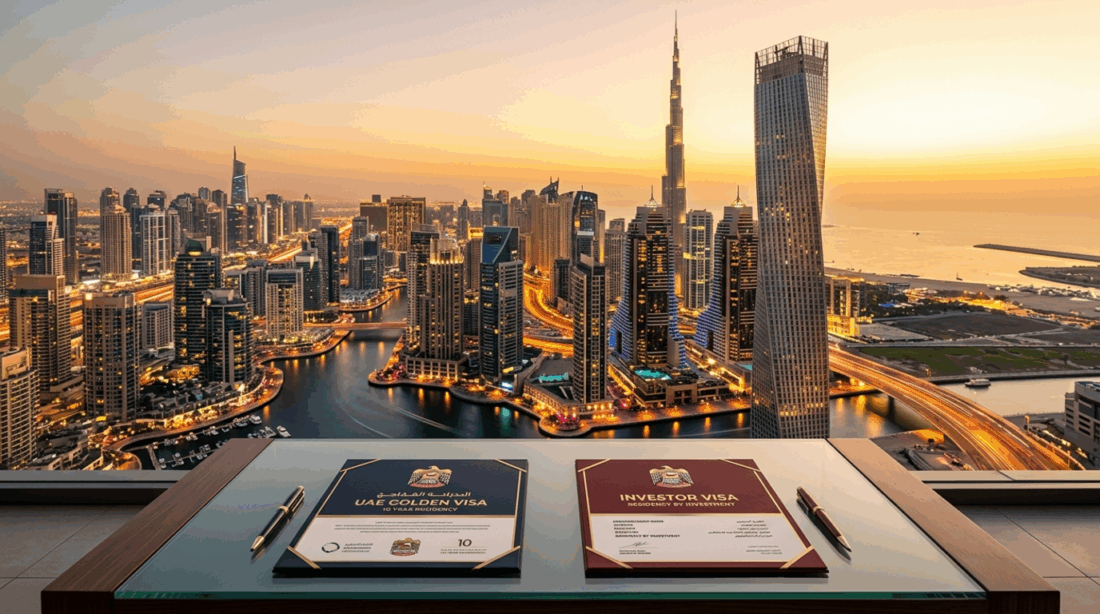
- Ten years, renewable. One application covers a decade instead of the old two-year or three-year cycle.
- No minimum stay. You can live outside the UAE for as long as you want without losing it. A normal UAE residence visa is cancelled after six months away. The Golden Visa is not.
- Family included. You can sponsor your spouse and children, and you can sponsor domestic staff, under the same visa.
- Self-sponsored. You are not tied to a job, so changing or leaving work does not threaten your status.
- A base for banking and business. Residency makes it easier to open and keep UAE bank accounts and to set up a company.
On tax, the picture is good but worth stating plainly. The UAE charges no personal income tax, and there is no tax on rental income or capital gains for individuals. That is a real advantage. It is not unique to Golden Visa holders, though. It applies to UAE tax residents generally. If you are a citizen of a country that taxes worldwide income, such as the United States, your home country can still tax your Dubai rental income and gains, so check your own rules before counting the savings.
Key point: the Golden Visa is a residence permit, not a passport. The countries you can enter without a visa still depend on the passport you already hold. A handful of places ease entry for UAE residents, but the visa does not upgrade your travel document.
What it really costs
The visa fees are small. The property is where the money goes. Treat these as two separate buckets, because mixing them is how people end up confused about whether the visa is “expensive.”

The visa side
Government fees for a property-route Golden Visa in Dubai run to roughly AED 10,000 for the main applicant in 2026. The Dubai Land Department’s published all-in fee for the investor route covers the residence permit, the medical fitness test, and the 10-year Emirates ID in one charge. On top of that you will usually pay for a DLD property valuation certificate, which starts around AED 4,000 and is often issued the same day. Add medical and Emirates ID costs for each family member, plus health insurance, which is required.
Visa-side item Typical 2026 cost (AED)
DLD investor fee (main applicant, all-in) ~10,000
DLD property valuation certificate from 4,000
Medical fitness test (per person) 300 to 700
10-year Emirates ID (per person) ~1,150
Health insurance (per person, annual) 800 to 1,500
So the visa itself, including a couple of family members, lands somewhere in the region of AED 15,000 to 25,000 one time. Spread over 10 years, that is a rounding error against a multi-million-dirham property.
The property side
This is the real outlay. To qualify you need property with a total value of at least AED 2 million. On top of the purchase price, Dubai adds transaction costs that typically run 6 to 9 percent of the price. The big one is the transfer fee charged by the Dubai Land Department at 4 percent of the sale value. By market habit the buyer usually pays it, though it is negotiable. Then there are agency commissions (about 2 percent), a title deed fee, mortgage registration if you borrow, and a smaller admin charge.
Property-side cost Amount
Qualifying property value: AED 2,000,000 minimum
DLD transfer fee: 4% of price
Agency commission ~2% of price
Title deed and admin fees Several thousand AED, fixed
Total transaction costs ~6% to 9% of price
On a AED 2 million purchase, plan for roughly AED 120,000 to 180,000 in costs beyond the price. None of that is a “visa fee.” It is the normal cost of buying Dubai property, and you would pay it whether or not you wanted residency.
One detail makes the route easier than it used to be. Mortgaged property now qualifies. Since February 2026, the old rule that you had to have paid at least half the value, or AED 1 million, upfront has been removed. What counts now is that the property’s DLD-recorded value reaches AED 2 million. If you have a mortgage, your bank issues a no-objection letter, and you are eligible. You can also combine more than one property to reach the threshold.
Do the returns justify the AED 2 million?
This is the question that actually decides whether the visa is “worth it,” because the visa rides on the property. The good news is that Dubai property has paid investors well. Gross rental yields in the city typically run from 5 to 9 percent, depending on the area and property type. Apartments in mid-market, well-connected communities such as Jumeirah Village Circle, Business Bay, and Dubai Marina tend to deliver the strongest rental yields. Prime villa areas like Palm Jumeirah and Downtown lean more toward price growth than rental income.
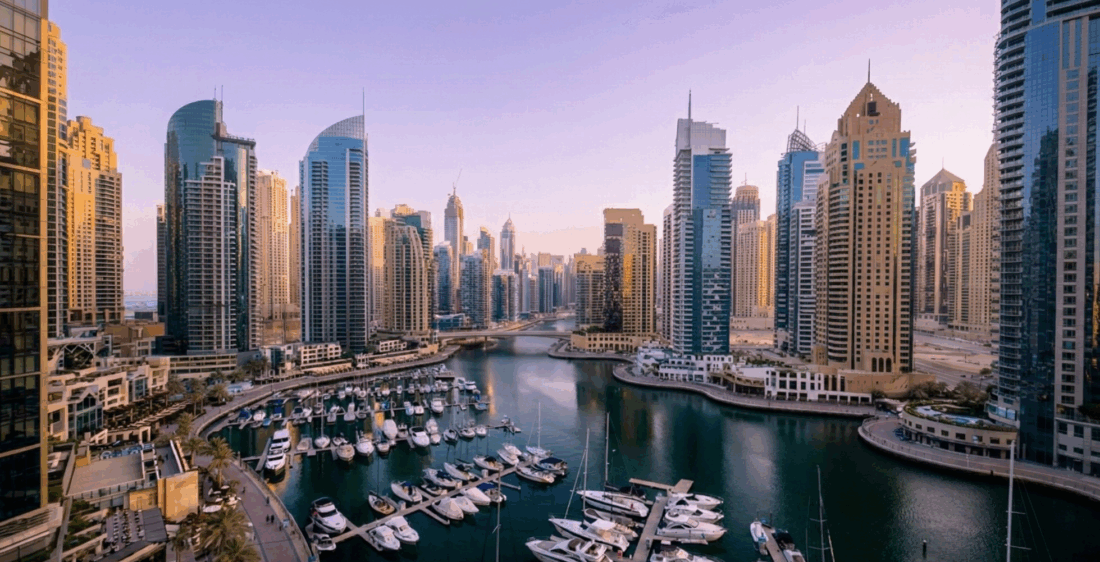
Put rough numbers on it. Say you buy a 2 million AED apartment at a 7 percent gross yield. That is about AED 140,000 a year in rent before costs. Now take the costs off. Service charges in Dubai are billed per square foot and vary a lot by building; a chiller-included tower costs more than a basic block. Add property management at roughly 5 percent of rent if you use an agent, allow for a few weeks of vacancy between tenants, and set aside something for maintenance. After all that, a net yield of 5 to 6 percent is a realistic target in a well-chosen unit, which is roughly AED 100,000 to 120,000 a year in your pocket. None of it is taxed in the UAE. Against that income, the one-time visa cost is trivial, and even the 6 to 9 percent buying costs are earned back within about a year and a half of net rent in a strong property.
Where you buy matters more than the headline yield. A high advertised yield in an oversupplied area can evaporate when ten similar units list for rent on the same street and you have to cut the price to fill yours. A slightly lower yield in an established, supply-constrained community is often the safer income. Match the property type to your goal: apartments in well-connected mid-market districts for rental income and prime villas for slower but steadier price growth.
Now the caution. Prices have run hard for several years, and growth is clearly cooling in 2026. Values across the city are still up year on year, but the pace has slowed, and buyers have turned pickier about location and developer quality. A large wave of new homes is due, with figures around 100,000 to 120,000 units forecast to complete in 2026, which raises the risk of oversupply in delivery-heavy, mid-market areas where a lot of those units sit. Ratings agency Fitch has warned of a possible correction in the region of 10 to 15 percent as that supply lands. Population growth keeps absorbing inventory, so a citywide crash is not the base case, but a softer patch in specific clusters is a real possibility.
The takeaway: do not buy a marginal property just to get a visa. Buy a property you would be happy to own with no visa attached, in an area with genuine rental demand and limited new supply, and let the residency come along for the ride.
Who it is worth it for, and who should skip it
The visa is worth most to people who get real use out of long-term, flexible UAE residency. It is worth far less to someone chasing pure investment return who has no interest in the UAE itself.

Worth it for
- Expats already in Dubai. If you live and work here, the Golden Visa ends the renewal treadmill and stops your status from being tied to a job. For many residents this alone justifies it.
- Frequent visitors and second-home buyers. If you want a base in Dubai you can use freely, with no minimum-stay worry, the no-stay rule is a genuine benefit.
- Globally mobile families. Family sponsorship, schools, healthcare access, and a stable regional base add up when you are planning for the long term.
- Buyers who were going to invest in Dubai anyway. If the property makes sense on its own, the visa is close to free upside.
Think twice if
- You only want returns. If you have no interest in living in or visiting the UAE, you are tying up AED 2 million for a residency you will not use. The property might still be a fine investment, but then judge it as an investment, not a visa.
- You would stretch to reach AED 2 million. Buying at the edge of your budget in a weak area, just to qualify, is the classic mistake. A poor property with a visa is still a poor property.
- You expect passport or visa-free travel. It is residency, not citizenship, and it does not change which countries you can enter on your own passport.
- You need liquidity. Property is not quick to sell, and you must keep the qualifying investment to keep the visa. If you may need the cash soon, this is the wrong place for it.
The downsides worth knowing before you buy
A fair verdict needs the negatives, and most of them sit on the property side, not the visa side.
- Your money is locked in. The visa is tied to the asset. Sell the property below the threshold and you can lose the residency. A lien is placed on the property to enforce this.
- Market risk is real. Prices can fall, especially in oversupplied pockets. The visa does not protect the value of your investment.
- Holding costs add up. Service charges, maintenance, management fees, and vacancy all eat into that headline yield. Budget for them.
- Home-country tax may still apply. UAE tax-free status does not erase your obligations elsewhere if your country taxes worldwide income.
- Rules change. The thresholds and conditions have been revised several times since 2019. What qualifies today may shift, so confirm the current rules at the time you apply.
How to qualify and apply
The property route is the most common and the most straightforward way in because eligibility comes down to one measurable thing: documented property value of at least AED 2 million. Here is the path.
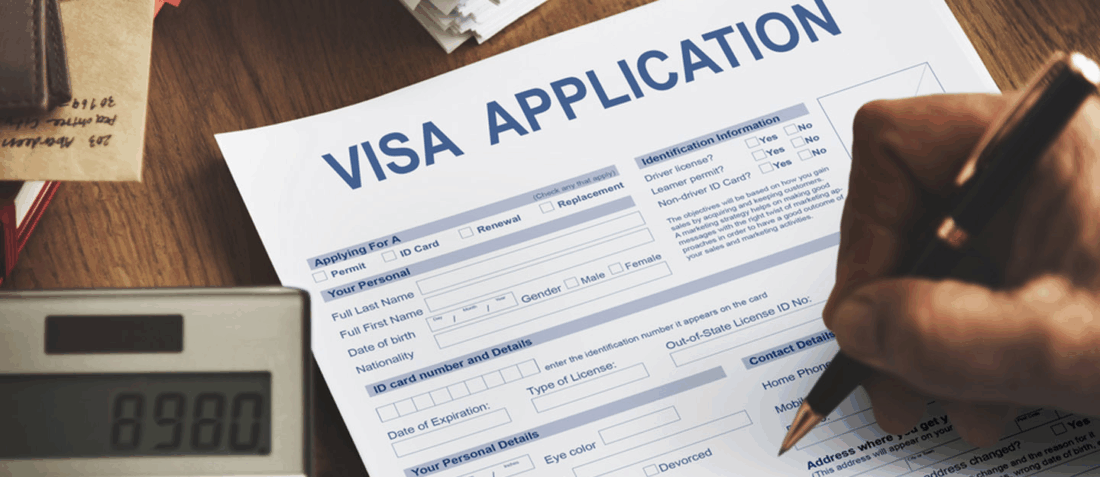
- Buy qualifying property. One or more freehold properties in a designated area, with a total DLD-recorded value of at least AED 2 million. Leasehold does not count. A mortgage is fine since February 2026.
- Get the paperwork. You will need your title deed (or the off-plan registration document), a DLD valuation or property status certificate showing the value, your passport, photos, and proof of health insurance. If the property is mortgaged, get a no-objection letter from your bank.
- Apply through the right channel. Property-based applications in Dubai go through the Dubai Land Department and the GDRFA, or federally through the ICP Smart Services portal.
You can read the official requirements on the UAE government’s Golden Visa page before you start, since that is the source that stays current as rules change.
- Complete medical and biometrics. Once your entry permit is approved, you do a medical fitness test and biometrics, then your Emirates ID is issued.
- Add your family. After your own visa is issued, sponsor your spouse and children under the same residency.
Processing is usually quick. The main applicant’s visa often comes through in about one to two weeks, with family members following shortly after.
Two practical notes. If you buy off-plan, you can often start the application once the property is registered and you hold the developer’s registration document, so you do not always have to wait for the building to finish. And keep proof of the value recorded at the time the visa was granted. Your residency stays secure even if the market dips later, as long as the original qualifying value was met, so the documents from your purchase are worth filing carefully.
Frequently asked questions
Is AED 2 million the minimum to get the Golden Visa through property?
Yes. You need one or more properties with a total DLD-recorded value of at least AED 2 million. You can combine properties, and since February 2026, a mortgaged property qualifies if the value reaches the threshold.
Does the Golden Visa give me visa-free travel like a passport?
No. It is a residence permit, not citizenship. The countries you can enter without a visa still depend on your own passport. A few places ease entry for UAE residents, but the visa does not change your travel document.
What happens to my visa if I sell the property?
If you sell and your qualifying investment drops below AED 2 million, you can lose the residency. A lien is placed on the property to make sure ownership is maintained while you hold the visa.
Do I have to live in the UAE to keep it?
No. The Golden Visa has no minimum-stay rule. You can live outside the UAE for any length of time without losing it, unlike a standard residence visa, which is cancelled after six months away.
How much does the visa itself cost, separate from the property?
Government fees for the main applicant run to roughly AED 10,000 in Dubai, plus a property valuation of about AED 4,000 and per-person costs for the medical test, Emirates ID, and insurance. The property and its 6 to 9 percent buying costs are separate.
Conclusion
For most people buying AED 2 million or more of Dubai property, the Golden Visa is worth it. The fees are small, the residency lasts 10 years and renews, there is no minimum stay, and your family is covered. But the visa is the easy part. A good result comes from buying a property that stands on its own, in an area with real rental demand and limited new supply. Do that, and the residency is a near-free bonus. Buy a weak property just to qualify, and no visa will fix it.
Recommened Articles:
Does the UAE Golden Visa Require an Employment Contract?
Does the UAE Golden Visa Require an Employment Contract?
How Long Does the Golden Visa Last for Property Investors in UAE?
Is AED 400,000 Property Share Enough for UAE Residency in 2026?